Materials for the tight lanes of Rochester
The High Street runs up from the river to the cathedral, and the streets off it were laid out for carts and feet rather than lorries. Parts of the High Street are pedestrian, and several of the lanes are too tight for a lorry to turn in. This guide is for the shops, flats and yards on those streets: where a load can stand, how it reaches the back, and what size of bag suits a carry.
Rochester Builders Merchants is the Rochester delivery site of Discount Builders Merchants (KENT) LTD, the builders' merchant at Lower Road, Northfleet, DA11 9BB. There is one yard, and orders are placed on www.discountbm.co.uk.

Finding a place to stop
Start with the street, not the house. A pedestrian stretch has no stopping place for a lorry, and a lane too tight to turn in means the driver must reverse out, which a careful driver will not do far. Ask the yard for the nearest point the vehicle can reach, and the nearest point where it can stop without blocking a doorway.
Pick the set-down point before the day. It is usually a corner at the end of the lane or a car park at its mouth, and everything is carried from there. Name the corner on the order, and send a photograph if the lane is hard to describe in words.
Carrying it by hand
A load carried on foot is sized to the carrier. Bricks go in packs one person can lift, and blocks one or two at a time. Cement and sand come in 25 kg bags, which is as much as most people carry any distance. A bulk bag needs a machine to move it, so it stops at the set-down point, and what is inside goes up the lane by barrow.
Measure the narrowest point between the set-down and the job, and check that a barrow passes it with room either side. A sack truck is often the better tool in a lane with steps, because it can be tipped up a step without being lifted.
Shopfronts and the working day
On a High Street with the shops open, the work fits round them. Plan the drop for a quiet hour, keep a clear walkway for shoppers, and do not leave a pallet on the pavement for a morning. The neighbour whose door it blocks is the one who will ring about it.
Restrictions on the High Street and the lanes off it are set by Medway Council, and any suspension or timed permit is arranged with the council, not with the yard. Book it before the date is fixed, since a permit can take longer to come through than the job takes to do.
Keeping stock dry and out of the way
Stock that arrives early has to stand somewhere, and a lane is the worst place for it. Keep cement off the ground and under cover, and keep sand bags closed until they are needed. Brick packs can wait on timber in a yard, but a pack left in a lane is a hazard to passers-by and an invitation to thieves.
Neighbours and shared walls
Many High Street yards share a wall with the next house, and a barrow route often crosses a neighbour's ground. Agree the route before the job starts. A few boards laid along it protect a neighbour's paving and the new surface alike.
Rules of thumb
| Bags for a carry | 25 kg bags of cement, building sand and mini ballast go by hand. A bulk bag stops at the set-down point. |
|---|---|
| Bulk bag | About 0.8 tonnes a bag, moved by machine and so left at the end of the lane. |
| Paving slab | Slabs of 900 x 600 mm cover 0.54 square metres each, so a square metre takes close to two. |
| Type 1 spread | Roughly five square metres to the tonne at 100 mm, compacted. |
| Concrete from bags | A cubic metre of 1:5 concrete takes about 13 bags of cement and 1.9 tonnes of ballast, or roughly 76 bags of 25 kg ballast. |
| Barrow route | Measure the narrowest point and allow room for the barrow on both sides. |
The shop has calculators that turn a measurement into a quantity.
Worked order: A concrete base for a bin store, carried up a lane off the High Street
| Product | Quantity | What it is for | Cost |
|---|---|---|---|
| Mini Ballast approx. 25kg | 22 at £2.25 | A base 2.4 m by 1.2 m and 100 mm thick is 0.29 cubic metres. The ballast weighs about 1.9 tonnes for each cubic metre, so the base needs 0.55 tonnes, or about 22 bags of 25 kg, each carried up the lane by hand. | £49.50 |
| 25kg Mastercrete Cement (plastic) | 4 at £7.99 | The same 0.29 cubic metres at 13 bags a cubic metre is 3.7, so four. | £31.96 |
| Goods | £81.46 | ||
| Delivery to ME1 | £0.00 | ||
| Delivered total ex VAT | £81.46 | ||
| Delivered total inc VAT | £97.75 | ||
Not in this order: A sub-base of type 1 under the base, which would need a bulk bag set down at the end of the lane, the shuttering boards, and any reinforcing mesh, which depends on the design.
The quantities are a starting point for a job of this size. Put the same goods in a basket on www.discountbm.co.uk with your own postcode to see the figure for your order, or send the yard your list.
On the shop today
The products this guide talks about, from the shop's Aggregates aisle. Prices last checked .
-
 Mini Ballast approx. 25kg
each
£2.70 inc VAT
£2.25 ex VAT
In the yard
-
 Bulk Bag Soft Building Sand Nepicar
each
£55.00 inc VAT
£45.83 ex VAT
In the yard
-
 Bulk Bag Ballast 20mm
each
£48.00 inc VAT
£40.00 ex VAT
In the yard
-
 Bulk Sharp Washed Sand
each
£48.00 inc VAT
£40.00 ex VAT
In the yard
-
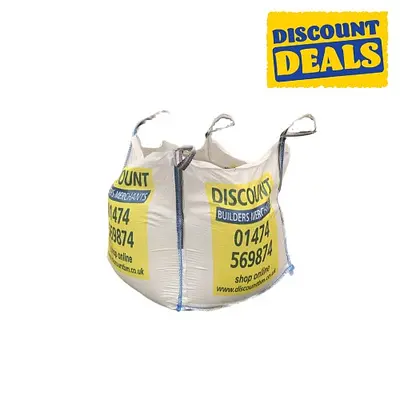 Bulk Type 1 Roadstone
each
£55.00 inc VAT
£45.83 ex VAT
In the yard
-
 Tonnes Loose Ballast
tonne
£42.00 inc VAT
£35.00 ex VAT
In the yard
-
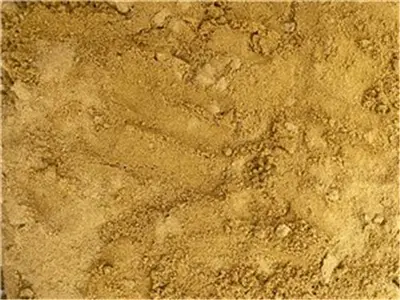 Tonnes Loose Sharp Washed Sand
tonne
£42.00 inc VAT
£35.00 ex VAT
In the yard
-
 Tonnes Loose 20mm Shingle
tonne
£48.00 inc VAT
£40.00 ex VAT
Low
Prices are the shop's prices today. Stock and ordering are on www.discountbm.co.uk.
Sand, ballast and stone delivered in Rochester See all Aggregates on the shop
Delivery to Rochester
- ME1
-
Free when the goods reach £41.66 ex VAT (£49.99 inc VAT).
A smaller order pays the difference up to that amount: goods of £25.00 ex VAT (£30.00 inc VAT) pay £16.66 ex VAT (£19.99 inc VAT) for delivery.
More guides for Rochester
- Matching brick for older Rochester houses Red brick on Georgian fronts and yellow stock on Victorian backs in Rochester: reading an old wall, sizing a course and buying a patch that matches.
- Concrete steps and paths on Rochester hills Levels, steps and concrete bases for the steep streets above Rochester High Street and the lanes that drop to the river, with a worked path.
- Walls for a Rochester rear extension Footing, cavity walls, openings and mortar for a single-storey rear extension in Rochester, counted wall by wall through to one order.